
Artifact #1 (InTASC #1: Learner Development, InTASC #3: Learning Environments)
The teacher understands how learners grow and develop, recognizing that patterns of learning and development vary individually within and across the cognitive, linguistic, social, emotional, and physical areas, and designs and implements developmentally appropriate and challenging learning experiences.
C.E.R (Claim, Evidence, Reasoning) Argumentative Murder Mystery Lesson for 7th and 8th.
This activity allowed for a diverse range of responses to the investigation from groups while focusing on the process of finding evidence for claims and strengthening arguments with logical reasoning.
Responses ranged from in-depth analysis of the text and photo supported by the effects of blunt-force trauma from other online sources to accuse the character "Queenie," to breakdowns of the photo and timing detailed in the text to clear her name.
This lesson plan emphasized learners unique needs and strengths, and also tasked them with grade level requirements for formatting their arguments (InTASC #1). It was student-led with Kagan structures being used to encourage group thinking as the focus to the assignment before sharing sharing their thought (InTASC #3). With only teacher guidance on the CER element, students were allowed to think freely on the problem and practice necessary skills.
There is also a thematic connection to the reflection prompt with the Project Zero Thinking Routine "Headlines". Students had to enter their own news headline summarizing their arguments on what happened in this scene.
Artifact #2 (InTASC #2: Learning Differences)
The teacher uses understanding of individual differences and diverse cultures and communities to ensure inclusive learning environments that enable each learner to meet high standards.
This tiered differentiation plan was focused on creating an inclusive environment with a dataset of students in a classroom. We were tasked with meeting the needs of individual students and identifying supports, tiered instructions, and identifying areas for the teacher to differentiate learning among individual students.
Artifact #3 (InTASC #5: Appplication of Content)
The teacher understands how to connect concepts and use differing perspectives to engage learners in critical thinking, creativity, and collaborative problem solving related to authentic local and global issues
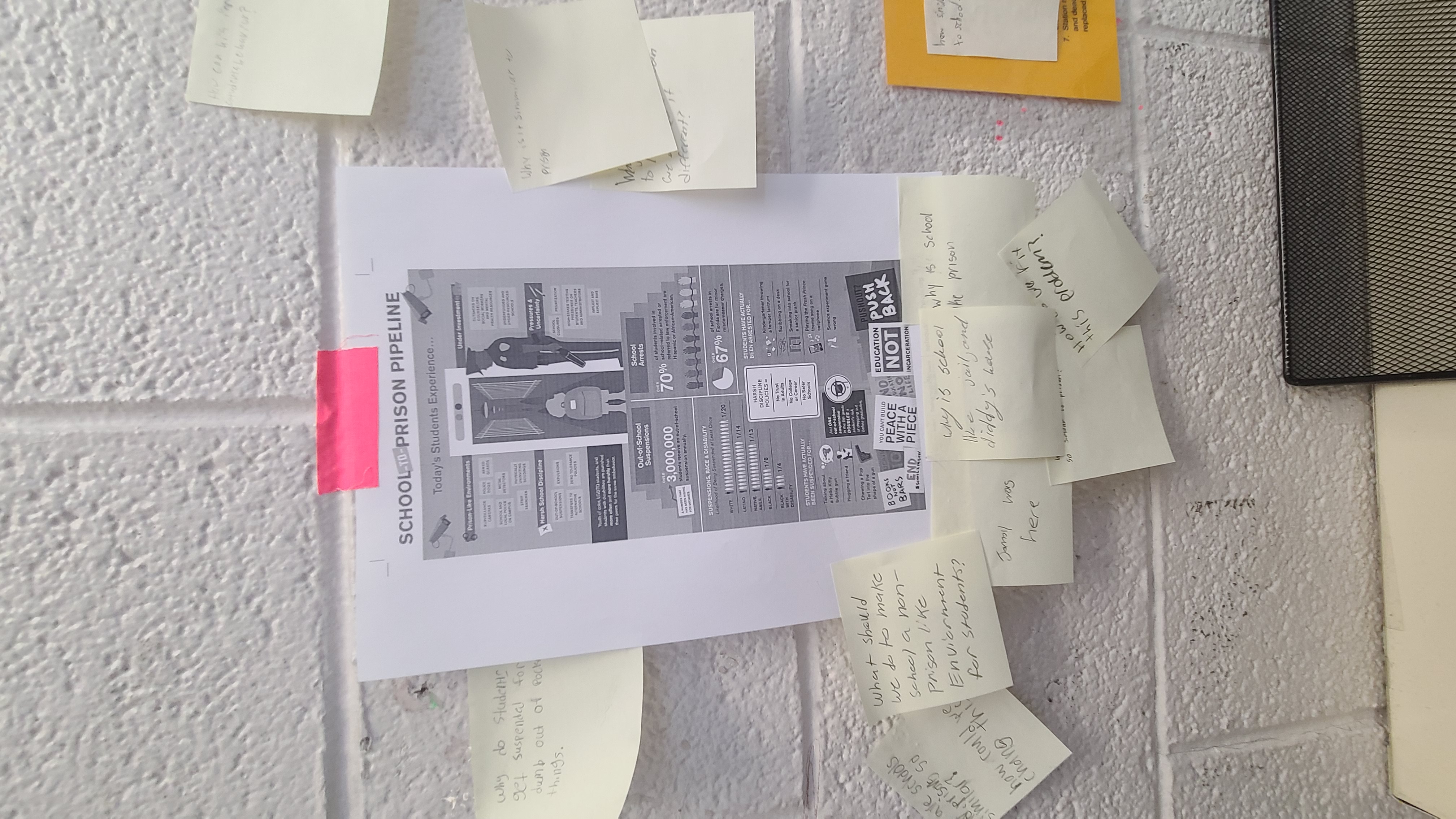
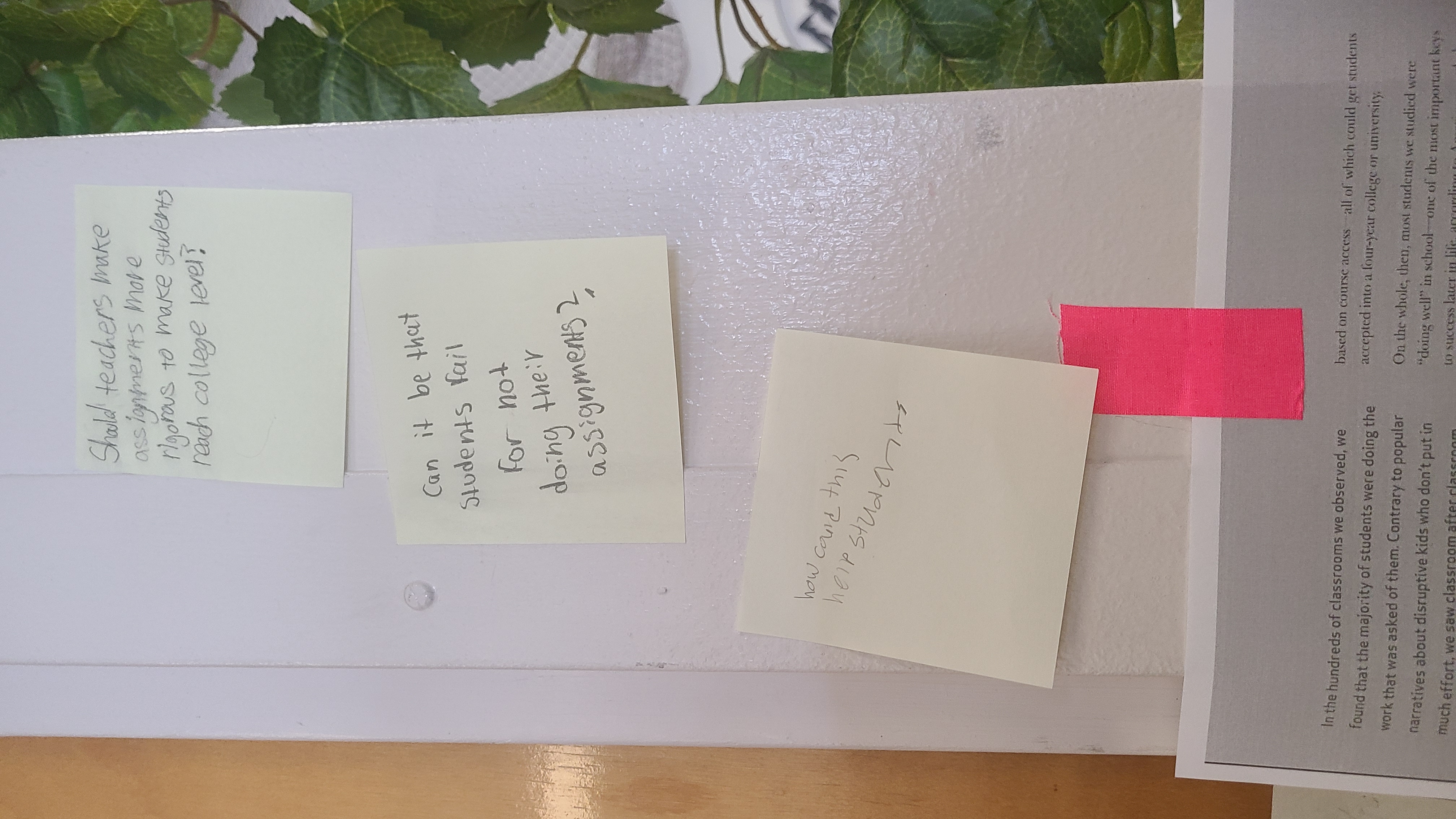
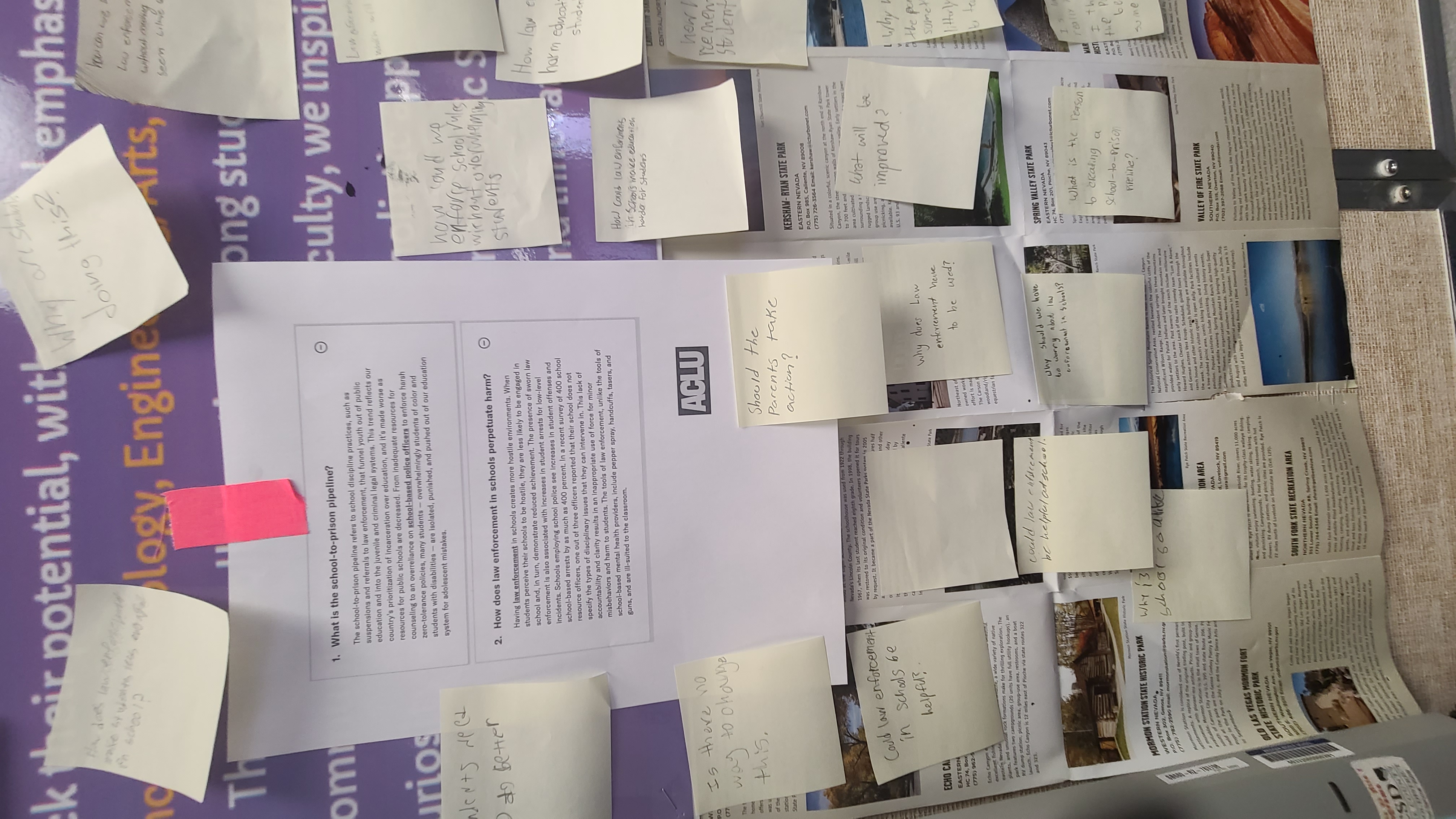
8th grade students were allowed to explore social issues such as the "School-to-Prison-Pipeline" and the "Opportunity Myth" which affect teenagers as part of their HMH unit "Finding Your Path." Students were tasked to create questions for other students during the gallery walk, talk about different perspectives, and possible solutions. When the gallery walk phase of the lesson was done, students were tasked to create slides according to their group roles, to critically reflect on the information, and take a stance on the topic.
Artifact #4 (InTASC #7: Planning for Instruction)
The teacher plans instruction that supports every student in meeting rigorous learning goals by drawing upon knowledge of content areas, curriculum, cross-disciplinary skills, and pedagogy, as well as knowledge of learners and the community context.
This artifact is from my EDRL 433 course (great class, btw) where I had planned instruction for a new unit that would've lasted about 4 weeks and took advantage of a liberatory education paired with comic book material. The culminative activity was a Multigenre Research Project, which heavily covered all the required standards for the unit, and diverse media and texts allowed for learners to have a diverse range of learning material.
Artifact #5 (InTASC #10: Leadership and Collaboration)
The teacher seeks appropriate leadership roles and opportunities to take responsibility for student learning, to collaborate with learners, families, colleagues, other school professionals, and community members to ensure learner growth, and to advance the profession

These are my notes from the beginning of Practicum 3 where I planned out the unit we thought we were going to do! Though we didn't end up actually doing this unit, my planning for my first takeover was fundamental to the vision of the Unit 6: Legacy of Anne Frank Unit Plan. We discussed these plans in length and I made a lot of points toward how it would fit our cross-curricular Project-Based Learning (PBL) requirements. However, it didn't end up meeting our history and science standards all too well, so we scrapped it and put our efforts toward our next unit! I apparently left a good impression among the staff in that meeting room for my collaboration and participation in there, so I thought it would fit here! Maybe it'll see the light of day sometime!